Info Please Call for an Appointment
Our regular office hours are:
Monday - Friday 8:00am to 5:00pm
We honor the following Insurances:
- AARP
- Accordia
- AIG
- AIK
- AmComp
- Anthem
- Blue Cross Blue Shield
- Bluegrass Family Health
- Division of Children with Special
Healthcare Needs
- First Health
- Fiserv
- Geico
- Humana
- Kentucky Access
- Kentucky Employers Mutual (KEMI)
- Kentucky Medicaid
- Kentucky Passport
- Medicare
- Ohio Workers Comp
- St. Paul Travelers
- Tricare
- UK HMO
- Wausau
- Weyerhaeuser
We gladly accept all Workers Compensation,
Veterans Administration and Vocational
Rehab Patients.
What can I expect following my amputation ?
What can I expect at my Orthotic appointment ?
FAQs Frequently Ask Questions:
How do I care for my residual limb?
Any wound from amputation or other surgery is at risk of becoming infected because the skin opening can allow germs or dirt to enter the bloodstream. Infections can cause tenderness or pain, fever, redness, swelling and/or discharge. These infections can lead to further complications, surgery or even death if not treated properly.
You will always need to pay special attention to the hygiene of your residual limb (not only just after the surgery), because it will be enclosed in the socket or liner of your prosthesis and so it will be more prone to skin breakdown and infections.
Remember: The best way to handle an infection is to PREVENT it by following these guidelines:
• Wash your residual limb with mild soap and water, then rinse it off and pat it dry. Do this at least
once a day, more if you perspire a lot or are treating a rash or infection.
• Wash anything that comes into contact with your skin (liners, socks, inner socket, etc.) with mild
soap and water, rinse, and dry (check the manufacturer's washing instructions).
• Do not use alcohol-based lotions on your skin as they can dry it out and can cause cracks, which
can lead to infections.
• Use only enough softening lotion to avoid flaking, peeling, dry skin.
• Maintain a good prosthetic fit; learn how to adjust your sock properly, if applicable, or go for a
prosthetic adjustment if you start to get redness over a pressure area. This will prevent the
pressure area from becoming a pressure sore.
• Maintain correct alignment of your prosthesis by wearing the correct heel for your foot and
maintaining a good socket fit.
• Eat a balanced diet and drink plenty of water to maintain supple, healthy skin.
• If you are a diabetic, monitor and maintain your glucose levels.
• If you have decreased sensation in your limb, remove your prosthesis several times per day to
check for pressure areas.
How often should I check my residual limb?
You should examine your residual limb every day. You should check for skin changes, such as blisters, redness, soreness, swelling, pain or drainage. Use of a long-handled mirror will help you identify skin problems early. Inspect all areas of your limb, including the back of your residual limb, and skin creases and all bony areas. If you notice any skin changes, please call your Prosthetist right away and do not wear your prosthesis until your Prosthetist has evaluated the situation.
Steps to maintaining healthy skin:
1. Every day, or more often if necessary, wash your residual limb with a mild or antibacterial soap
and lukewarm water. Rinse thoroughly with clean water to remove all soap.
2. Dry your skin by patting it with a towel. Be sure your residual limb is completely dry before
putting on your prosthesis. Allowing 15 minutes of air-drying before applying your prosthesis
should ensure that the skin is thoroughly dry.
3. Consult your Prosthetist before using moisturizing creams or lotions. Vaseline or petroleum
-based lotions degrade some types of prosthetic liners. Only use softening lotions when your
skin is at risk of cracking or peeling. If a moisturizing lotion is needed, it is best to apply it at
night or at other times when you will not be wearing your prosthesis. Do not apply lotions to
any open area.
4. If needed, applying an antiperspirant roll-on deodorant to the residual limb can help you control
odor and perspiration. Do not apply antiperspirant to any open area.
5. Do not use alcohol-based products on your residual limb; they dry out the skin and can contribute to
cracking or peeling. However, some amputees who place high demands on their residual limbs will
periodically (once a day to once a week) treat their residual limb with rubbing alcohol to toughen the
skin. The use of witch hazel (can be obtained at most drug stores) is preferred for this technique due
to the fact it will not dry out the skin as aggressively as rubbing alcohol. Over time, the witch hazel will
condition the skin and clear up any area of the skin that is more susceptible to pressure during the
course of the day. If cracking of the tissue occurs, discontinue use or treat less often.
6. Do not shave your residual limb; pressure from the prosthetic socket on "stubble" can cause the hair
to grow inward, become painful and, in the worst cases, even become infected. Never use chemical
hair removals on your residual limb.
7. Avoid prolong soaking in warm bathtubs or hot tubs because this may cause increased swelling in
your residual limb.
How often should I change my prosthetic socks?
Socks should be changed daily or as soon as they become moist with perspiration. However, if your sock is not in direct contact with your skin, worn between your liner and the socket, you may not need to change it so frequently. Throughout the day, the size of your limb may change. It may be necessary to change the thickness of the sock you are wearing. Your prosthetist can explain to you the relationship of sock thickness to proper prosthetic fit.
How should I clean my prosthetic socks/liners?
Cotton and nylon socks can be machine washed and dried.
? Wool socks should be washed by hand in a mild detergent, reshaped and air dried. Wool socks should also be worn in rotation, as this gives an interval of several days during which the socks can rest. Such a rest period allows the wool fibers to regain their natural resiliency and elasticity for optimal comfort.
? Prosthetic socks and liners should be washed daily, carefully following the manufacturers recommendations. Wearing a sock stretches it and perspiration hardens it. Washing and proper care restores its shape and softens it. Proper care of socks will reward the amputee with longer service and greater comfort. A sufficient supply of socks should be maintained to allow clean socks to be worn each day and to allow several days after washing before wearing.
What is phantom pain or sensation?
Phantom limb sensation is the feeling that the missing limb is still there. Although usually not painful, you may feel uncomfortable sensations such as burning, tingling and itching. Some amputees seek medical help for the phantom pain. Causes of phantom pain may be due to one or more of the following: changes in nerve circuitry, pain before amputation, blood clotting and/or neuroma.
You also may find that certain circumstances seem to trigger an episode of phantom pain, such as:
• Use of your artificial limb (prosthesis)
• Weather changes
• Pressure on the remaining part of the limb
• Emotional stress
• Fatigue
What is the rehabilitation team?
The rehabilitation team consists of specialists that will help you with youre rehabilitation process. Your physician, Prosthetist and physical therapist typically make up your rehabilitation team. Many other specialists may be involved in the rehabilitation process, including an occupational therapist, rehabilitation counselor, wound care specialist and social worker.
Resources Resources
Above Knee Amputee Manual
Information concerning the phases of Above Knee prosthesis fitting, covering amputation, fitting, and training, etc.
American Cancer Society
Home page featuring news, event information, community activities, and various resources.
American Diabetes Association
Provides basic information on type 1 and 2 diabetes. Also includes community resources, online shopping, and a healthy living section.
Amputation Online Magazine
Amputee-Online.com Newswire and Newswire archives.
Below Knee Amputee Manual
Information concerning the phases of Below Knee prosthesis fitting, covering amputation, fitting, and training, etc.
International Child Amputee Network
Internet Mailing List to provide information and support contacts to children with absent or underdeveloped limbs and their parents.
Limbless Association
Nationwide network of amputee volunteer visitors (within the UK) who offer support to prospective amputees and those who care for them.
Limbs for Life
A foundation dedicated to benefiting amputees by promoting advanced research and providing prosthetic devices for individuals who cannot otherwise afford it.
Pain Management (In Motion 2 page article)
An article by G. Edward Jeffries, MD, FACS that explains and answers questions concerning post-amputation pain and how to manage it.
Prosthetics Outreach Foundation
An organization dedicated to providing humanitarian relief and modern prosthetic care to amputees in developing countries. Includes pages for donations, resources, and FAQ's.
Spinal Cord Injury Information Network
Provides articles and publications which cover several aspects of Spinal Cord Injuries.
The Association of Childrens Prosthetic - Orthotic Clinics (ACPOC)
A non-profit organization that raising public awareness of physical disability, and improves the quality of rehabilitation medicine, science, and technology.
National Association for the Advancement of Arthotics and Prosthetics (NAAOP)
A non-profit organization that raising public awareness of physical disability, and improves the quality of rehabilitation medicine, science, and technology.
National Commision on Orthotic and Prosthetic Education (NCOPE)
A non-profit organization that raising public awareness of physical disability, and improves the quality of rehabilitation medicine, science, and technology.
Sports
American Amputee Soccer Association
An Association that organizes and competes in amputee soccer programs that range from recreational to International Paralympic competition.
Amputee Coalition of America (ACA)
A national, non-profit amputee consumer educational organization representing people who have experienced amputation or are born with limb differences. The site provides Policy, Advocacy, Information, and Publication pages.
Challenged Athletics Foundation
A group that has raised money and provided grants for over 850 physically disabled athletes.
Disabled Sports USA
A non-profit organization that offers nationwide sports rehabilitation programs to anyone with a permanent physical disability. Activities include winter skiing, water sports, summer and winter competitions, fitness, and special sports events.
National Amputee Golf Association (NAGA)
Supported by the Professional Golf Association, the NAGA was originally created by 12 amputees. It currently has 2000 members in the United States and 200 from 17 other countries.
National Sports Center for the Disabled
Provides therapeutic recreation programs that are designed for individuals with disabilities who require adaptive equipment and/or special instruction. Site provides sections for recreation, competition, education, volunteering, employment, and donations.
Orthotic and Prosthetics Athletic Assistance Fund
A non-profit organization that raising public awareness of physical disability, and improves the quality of rehabilitation medicine, science, and technology.
The Amputation Help and Resource Guide
Amputation is a surgical procedure that is performed to remove all or part of a limb or extremity. There are several causes as to why amputation must be performed, such as trauma; illness, such as diabetes; or infection at a distal site. The process of amputation is complex and typically involves rehabilitation therapy and potential prosthetic devices. While it is a complicated medical process that has affected millions, amputation has not stopped many people from continuing to live active and healthy lives.
What to expect after What to Expect after you amputation
Dressings
There are two basic modes of dressings to shape and help protect the sutures on your residual limb:
1. Most of the time, soft dressings are prescribed to allow for daily dressing changes and skin evaluations. After the dressings are applied, the initial application of an ACE wrap bandage is applied by your nurse, physical/occupational therapist or prosthetist. Often, the ACE wrap will be measured for a custom fit shrinker sock. The use of the ACE wrap and/or shrinker is critical in the shaping and control of swelling in the residual limb. You will be required to wear the shrinker/ACE wrap after massaging. The shrinker is worn until it is felt that the residual limb is stable from swelling. You may be required to wear a knee immobilizer to prevent knee contractures.
2. Rigid dressings consist of a plaster of paris or a fiberglass tape shell with soft sterile lining against the skin. Often a simple tube or alignment device with an artificial foot is attached to the end of the rigid dressing for minimal weight bearing and so that walking can begin immediately. This rigid dressing is generally changed in two weeks for evaluation of the stump for healing, and a new tighter sterile rigid dressing is applied.
Two to Three weeks after your surgery, you will return to your doctor for your first post operation visit and have your staples removed. Your second post operation visit will be two to three weeks later. At this visit, any remaining sutures will be removed. Generally, at the second post operation visit, the doctor will write a prescription for your prosthesis.
Please Note: The above is a typical post operation guideline. However, each doctor is different and results may vary.
Your Prosthesis
Once your residual limb has reached an acceptable shape, you are seen for the measuring and molding of the residual limb for a prosthesis. At this time, you should have:
1. A prescription for the prosthesis from your doctor.
2. All insurance information to determine what deductible and remaining balance is your responsibility prior to the delivery of the prosthesis.
3. A pair of shoes either new or slightly worn to determine the foot size and heel height, and shorts if you are being measured for a lower extremity prosthesis.
4. Wear your ACE wrap/shrinker at all times, including the first visit, so the Prosthetist can evaluate whether there is a need for adjustments or replacement.
You will be asked to fill out a fact sheet for contact purposes, and sign any applicable insurance forms. Your appointment will take approximately 45 minutes to two hours, depending on the complexity of the prescription. This initial process is generally performed at our office.
During the second visit, which is usually within two to three weeks, a socket is fabricated and designed to minimize pressure over areas of less tolerance (boney areas, scar tissue, nerve ends, sores, etc.) and monitor and reduce weight bearing on tolerant skin areas. The pressure marks on your residual limb are evaluated closely to determine appropriateness of the fit.
Expect general tightness and possible discomfort initially. Your residual limb has never been required to take your full body weight prior to the amputation. Tolerance to this new demand may take weeks or even months to become conditioned.
The socket is placed on an alignment device to allow the Prosthetist to make any required adjustments in length and alignment to improve comfort and gait. The appropriate suspension is also determined. This visit is sometimes very demanding, and requires one to two hours to successfully reach an acceptable result. Should the initial fitting not be satisfactory, an additional fitting may be required, or additions to the initial prescription could be considered.
When you and your Prosthetist determine that the device is fitting well, you can take the temporary prosthesis with you, following the wearing schedule outlined by the Prosthetist.
It is recommended that you work with a physical/occupational therapist on prosthetic gait training.
Generally, in the case of an upper extremity amputation, you are trained by an occupational therapist knowledgeable in prosthetics.
It should be noted that the term temporary prosthesis only implies that we expect your residual limb to continue to change in size/shape due to the pressures from the socket, and the increased circulation from greater activity.
The temporary is structurally sound and anatomically designed for each individual, but is not cosmetically finished. This allows greater adjustability, and will lessen the overall cost initially.
As you become more proficient with the use of the temporary prosthesis, you may find the need to add additional prosthetic socks to tighten the fit. Changes in the size of your residual limb are expected and sometimes inconsistent. Close maintenance is critical by the therapist and you. Should the socks not provide the required comfort and/or function, the Prosthetist should be contacted as soon as possible. Some situations can not be corrected prosthetically and a referral to your doctor may be warranted.
Click Here for Frequently Asked Questions .
What to expect appt What to Expect at Your Orthotic Appointments
When you call: Our receptionist will inquire as to your specific orthotic needs. We will ask about your prescription and current insurance. We will also attempt to schedule an appointment time that is most convenient for you.
Please be sure to bring the following items to your appointment:
1. Insurance Card
2. Photo ID
3. Prescription
When you arrive: You will be asked to fill out patient information forms while we make a copy of your insurance cards. Please make sure to have a CURRENT copy of your insurance information with you. Arriving 15 minutes before your scheduled appointment is recommended. These extra minutes give you time to fill out all necessary paperwork-even if you have been to our office before we may need to update your patient information. This will also ensure the Practitioner has adequate time to spend with you.
Once your information has been verified: You will be shown to a patient room specific to your needs and one of our practitioners will begin his or her evaluation.
Initial evaluation: During your first visit to our office one of our practitioners will conduct an evaluation of your condition and the orthotic device you require. The practitioner will ask you questions about the nature of the condition that leads you to need an orthotic device. We ask that you be as factual and thorough as possible when answering these questions. The more information our practitioner can gather the more effective they will be in creating a device appropriate to your needs.
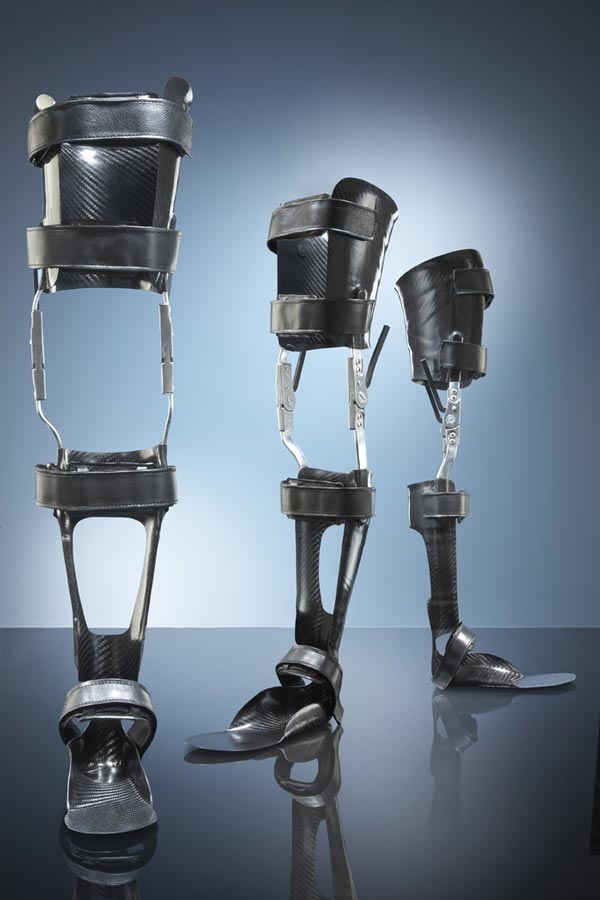
Casting/Measurement: After the practitioner has completed the initial evaluation, he or she may cast or measure you for the device that you need. The practitioner will create an impression of your limb. Once the mold has dried sufficiently, it will be gently removed along with residue. We will schedule you an appointment to return for the fitting of your orthotic device.
Initial fitting: You will return to our office on the scheduled date. At this time, the practitioner will see you to determine if the device constructed for you fits and functions properly. He or she will have you try on the orthotic device and will observe you while wearing it. Some devices may require adjustments in order to fit and function to their fullest. Usually these adjustments can be made on the spot and a short wait is all that is required.
Final fitting (if necessary): During this visit, the practitioner will make final adjustments and you will leave with your device.